How Parents Can Support Their Young Gymnast Without Putting on Pressure
Gymnastics is about far more than learning cartwheels, handstands, and routines. It is a sport that develops resilience, confidence, discipline, and determination. At Infinity Gymnastics is much Gymnastics can be an exciting journey for children. They learn new skills, build strength, gain confidence, make friends, and discover what their bodies can do. But like any sport, gymnastics can also come with challenges. A child may become frustrated when they cannot master a skill, nervous when trying something new, or disappointed when their progress does not happen as quickly as they hoped.
As a parent, you naturally want to help. Sometimes, however, the best support is not pushing harder, it is creating a positive environment where your child feels safe to learn, make mistakes, and grow at their own pace.
At Infinity Gymnastics Club, children can develop their skills while learning important lessons about discipline, focus, confidence, and perseverance. Parents play an important role in that journey. Here are five ways you can support your young gymnast without putting unnecessary pressure on them.
1. What to Say When Your Child Gets Frustrated With a New Skill
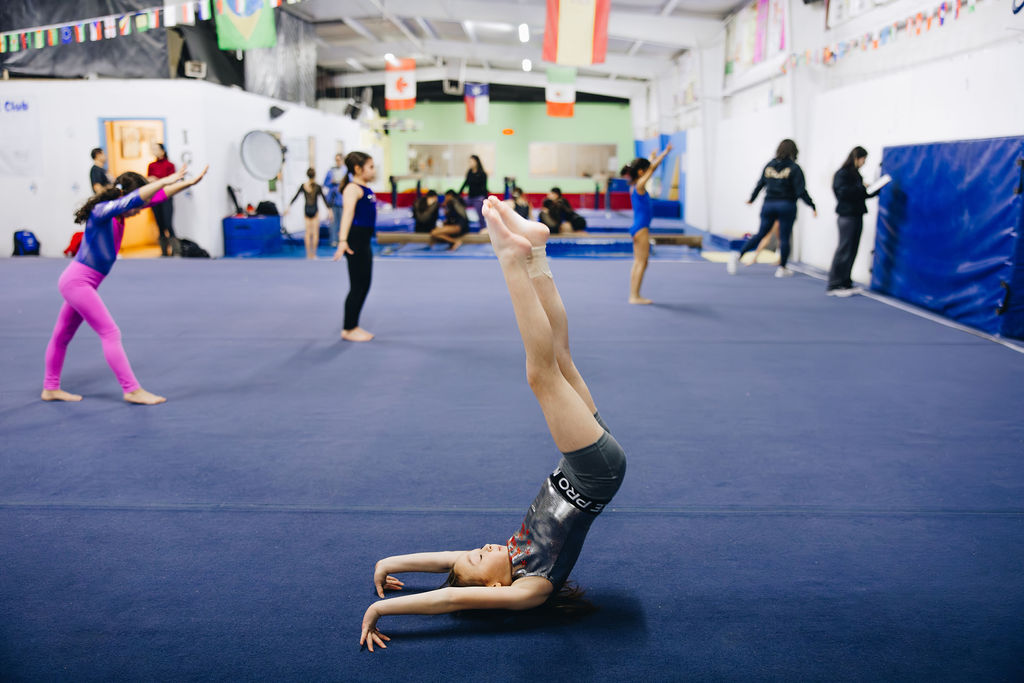
Learning gymnastics skills takes patience. A cartwheel, handstand, bridge, walkover, or pirouette may look simple when an experienced gymnast performs it, but learning that skill can take time.
When your child becomes frustrated, try to focus on encouragement rather than immediately trying to fix the problem.
Instead of saying:
“Why can’t you get it?”
Try:
“I can see you’re working really hard. Keep practicing, you’ll get there.”
You can also ask questions such as:
- “What part feels difficult?”
- “What did your coach tell you to work on?”
- “Would you like to take a little break?”
- “What part of the skill feels better than it did last week?”
These questions help children recognize that struggling with a skill does not mean they are failing. It simply means they are learning.
Sometimes the most helpful thing a parent can do is listen. Your child may not need a solution, they may simply need to know that you understand how they feel.
2. Celebrate Progress Instead of Perfection
One of the biggest gifts parents can give young athletes is the understanding that progress matters more than perfection.
Gymnastics involves technique, strength, flexibility, balance, coordination, and body awareness. Developing all of these skills takes time. Children will have good days and difficult days, and their progress may not always be obvious.
Instead of focusing only on whether your child landed a skill perfectly, celebrate the smaller victories.
Maybe they held their handstand for two seconds longer.
Maybe they finally felt comfortable attempting a skill they were afraid of.
Maybe they listened carefully to their coach.
Maybe they showed up and practiced even though they were having a difficult day.
Those moments matter.
Try saying:
“I noticed how much stronger your handstand looked today.”
or
“You didn’t give up when it was difficult. I’m proud of you.”
This teaches children that success is not always about getting everything right. Sometimes success means trying again.
3. Five Ways Parents Can Help Their Children Stay Motivated
Motivation naturally changes over time. Even children who love gymnastics may occasionally feel tired, frustrated, or less interested.
Here are five ways parents can help keep the experience positive.
1. Let Them Enjoy the Sport
Allow your child to enjoy gymnastics for what it is. Not every practice needs to be about achieving a new skill.
Sometimes children simply want to move, have fun, and spend time with their friends.
2. Recognize Their Effort
Notice the work they are putting into their training. Effort is something children can control, while natural ability and how quickly they learn a skill can vary.
3. Avoid Comparisons
Every gymnast develops differently. Comparing your child to another gymnast can create unnecessary pressure.
Instead, encourage them to compare their current abilities with where they were a few months ago.
4. Celebrate Small Goals
Help your child notice small accomplishments. Holding a position longer, improving flexibility, remembering a routine, or becoming more comfortable with a skill can all be meaningful achievements.
5. Give Them a Voice
Ask your child what they enjoy most about gymnastics. You may discover that their favorite part isn’t competition or learning difficult skills. Maybe they love tumbling, spending time with friends, learning new movements, or simply being active.
Understanding what motivates your child can help you support them more effectively.
4. How to Handle Fear When Your Child Is Learning a New Gymnastics Skill
Fear is a normal part of learning something unfamiliar.
A child may hesitate before attempting a new skill because they are unsure what will happen. Telling them, “Don’t be scared,” may seem encouraging, but it does not necessarily make the fear disappear.
Instead, acknowledge the feeling.
You might say:
“It’s okay to feel nervous. You’re learning something new.”
Then allow their coach to guide the learning process.
Gymnastics coaches understand that children need time to develop the strength, coordination, confidence, and technique necessary for new skills. Parents do not need to become the coach at home.
Your role is to provide emotional support.
You can also celebrate bravery rather than the outcome:
“You were nervous, but you tried.”
That message can be incredibly powerful.
Children learn that being brave does not mean never feeling afraid. It means learning how to move forward when something feels challenging.
5. Remember That Your Role Is to Support, Not Pressure
Parents have a unique role in a child’s athletic journey. Coaches teach skills and technique, while parents can provide encouragement, stability, and unconditional support.
After practice, instead of immediately asking:
“Did you learn a new skill?”
try asking:
“Did you have fun today?”
or
“What was your favorite part of practice?”
These simple questions can change the conversation.
Your child should know that your love and pride do not depend on whether they mastered a new skill, won a competition, or received a certain score.
The goal is to help them develop a healthy relationship with movement, challenges, and achievement.

Growing One Skill and One Step at a Time
Gymnastics is about much more than flexibility, strength, and impressive skills. It can teach children patience, focus, discipline, perseverance, and confidence.
There will be successes and setbacks along the way. There will be skills that seem easy and others that take much longer to master. That’s part of the journey.
Parents don’t have to have all the answers. Sometimes the most important thing you can do is cheer from the sidelines, listen after a difficult practice, celebrate the small victories, and remind your child that they don’t have to be perfect to make progress.
At Infinity Gymnastics Club, the journey is about helping children grow in a safe, positive environment while developing physical abilities and important life skills. With supportive coaches and encouraging parents, young gymnasts can learn that progress takes time, and that every small step forward is worth celebrating.
GET IN TOUCH
Join IGC Today!